Loose Autumn Moans (2003)

“Wellington, NZ composer Dave Edwards with some able assistance from duo or trio the Winter... Guitars, violin, cello, and percussion all stack up… He’s got a persona that’s all his own.” George Parsons, Dream Magazine #5

Listen

About

All acoustic, no overdubs, and complete with a string section! Recorded and mixed on analogue equipment, and originally released on cassette in 2003 – new 2020 remaster.

Edwards‘ art is always an interactive experience, and the spontaneous nature of his audio output encourages descriptions such as abrasive, discordant, sombre and atmospheric. Such adjectives contribute but never tell the whole tale.” – Real Groove

The album is structured as a progression from summer. The cover image shows a NZ pohutukawa tree in flower. It continues through autumn, a time of harvest, preparation, shortening daylight, and the shedding of old dead layers.

It finishes with an extended live version of ‘O Henry Ending‘, recorded at the Winter’s first gig.

O Henry falling leaves & branches, talk a worried sad refrain

Your eyes half tilt, your brain half mast

To tie the fond anonymous bond beyond yr aching shelter lying walls

That fall to fall, & raise the days, museum haze …”

Credits

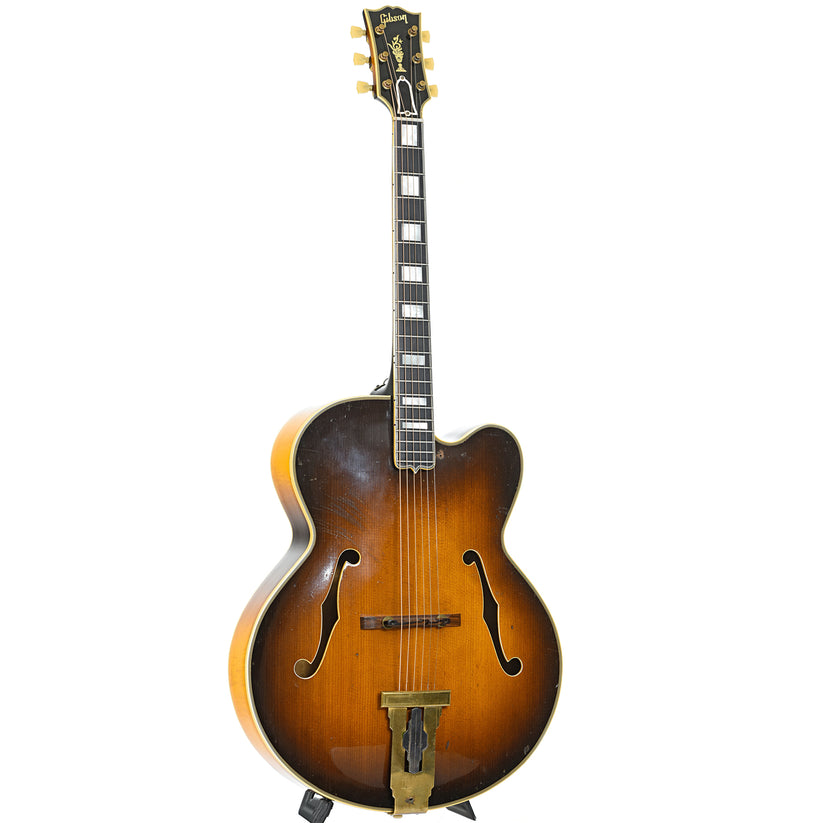
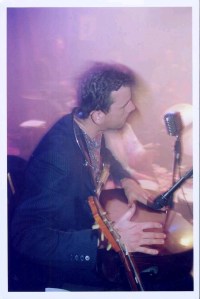
Dave Edwards (archtop acoustic guitar, harmonica, vocal, lyrics)

Sam Prebble (violin) / Mike Kingston (cello)

sam & san

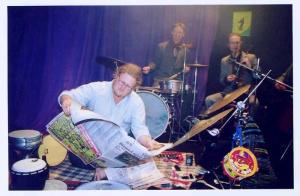
Simon Sweetman (percussion)

simon w newspaper

Recorded in Wellington, NZ, 2003

Tracklist

1.
2.
3.
4.
5.

Dedication: Bond Street Bridge

Loose Autumn Moans is dedicated to Sam Prebble (aka Bond Street Bridge), who died in 2014.

Rest easy Sam, and thank you..

Further listening

The Winter: Shortest Days 2003-2015

Continuing the seasonal theme, Dave Edwards, Mike Kingston, and Simon Sweetman (occasionally joined by Sam Prebble) formed a regular free improvising instrumental trio , the Winter.

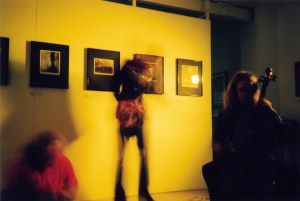
The Winter live at Photospace Gallery, July 2003 (photo by James Gilberd)

“A strange sonic brew that includes dissonant rock textures, rough outsider folk-blues mysteries, electric and acoustic improvisations and a considerable part of tasty feedback. Imagine equal parts Derek Bailey, New Zealand’s Pumice and classic ’60s blues/folk and you’re in the right ballpark.”The Broken Face

After the Filmshoot (2002)

The original C60 cassette release of Loose Autumn Moans included solo interludes recorded the previous year, in 2002. These have since been reissued as a separate album.

By shortening to just the 2003 ensemble sessions, Loose Autumn Moans becomes concise. It emphasises the lyrics, and the jazzy acoustic instrumental interplay.

After Maths & Sciences (2005)

A different take of ‘O Henry Ending‘ was recorded in Melbourne, Australia in 2005. I had just bought a banjo (which I still have), Mike Kingston played acoustic guitar this time, and Francesca Mountfort took the cello role, along with Cylvi M on percussion.

While much of the album was in a new style, incorporating electronica and field recordings, ‘O Henry Ending’ and the presence of fellow expat kiwis provided a thematic bridge from the Wellington days.

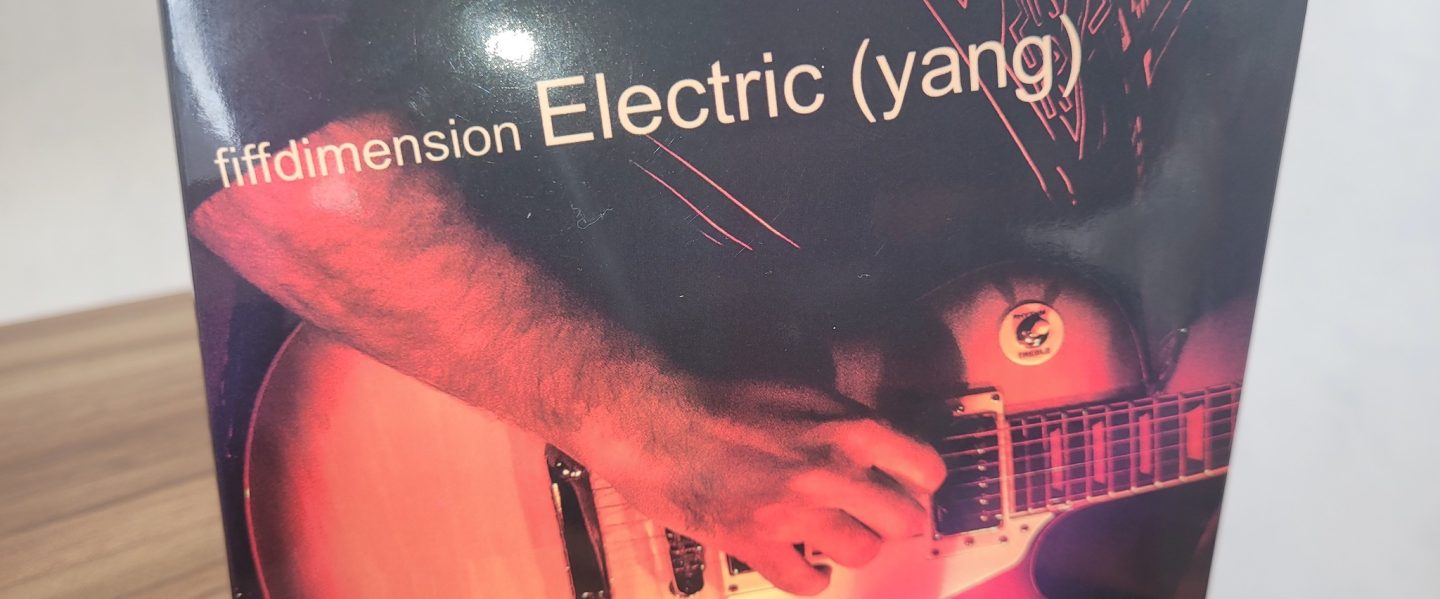
Acoustic yin / Electric yang – 2CD 1998-2023

To illustrate how a song can be interpreted in multiple ways, the fiffdimension 25th anniversary 2CD features Mouth of the Caveman – and both the 2005 Melbourne version and a new (2022) a live electric arrangement of O Henry Ending

Live 2019 and Live 2022-24

Three of the Loose Autumn Moans tracks were revived in new solo arrangements for these more recent live albums:

Gleefully Unknown: 1997-2005 compilation

Tracks from Loose Autumn Moans also appear on this compilation, that gives an overview of the early years.

Poems & Lyrics by John Collie (1856).

My great-great-grandfather (himself a young man at the time) self-published a book of poems in 19th century Scotland. It includes a piece about Autumn.

Adapting John Collie’s words to music is a current major work-in-progress, that .allows a new ‘mature’ version of my acoustic style, and shows the early works, like Loose Autumn Moans, in a new light!

After the filmshoot (2002)

Dave Edwards solo cassette tracks, in Wellington NZ, 2002.

Listen

About

Meatwaters Festival, Wellington NZ, 2002

These solo recordings were originally released as interludes, between the acoustic ensemble pieces in the Loose Autumn Moans (2003) album. But they’re now re-presented separately as a standalone short album (with a different running order and some light remastering).

I wrote the words to the title track in a notebook during the wrap party for a short film I’d worked on – a surrealist description of the evening, based on deliberate mishearings of the conversations around me:

“Taking notes throughout the performance. Humans become worms, with a sameness that is frightening. Politics is bad: we knew this already, but now it’s confirmed. Collapse into laughter.

A cigarette chair from which comes a dictator; everyone in thrall to his conversation. A plastic wooden horse to capture the city – incongruous? Indeed. Expelled all the virtues? You to decide.”

I made the soundscape with electric guitar and a 4-track tape recorder.

The other tracks on the album expanded on this wordy fusion of postpunk singer/songwriter and free improvisation. Radio stations wouldn’t touch it with a bargepole.

‘Working Like a Fountain in the Slender Morning Chill’, live 2010 version

Background

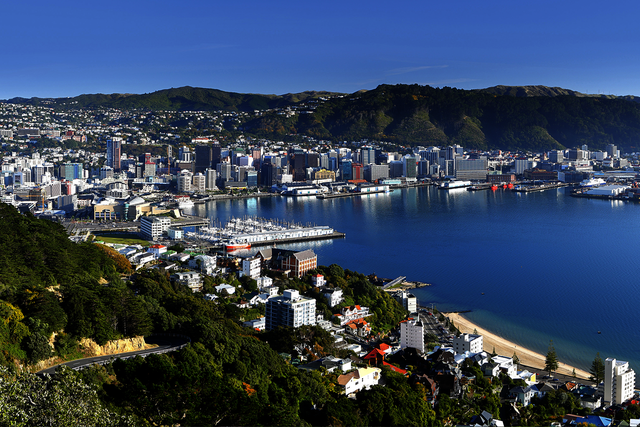
Wellington, New Zealand

In the early 2000s,  I was living in Wellington (New Zealand’s capital, and my birthplace), looking for a way to follow up the almost-success of The Marion Flow (part 2).

But I was moving further away from conventional 3min song formats into the avant-garde.

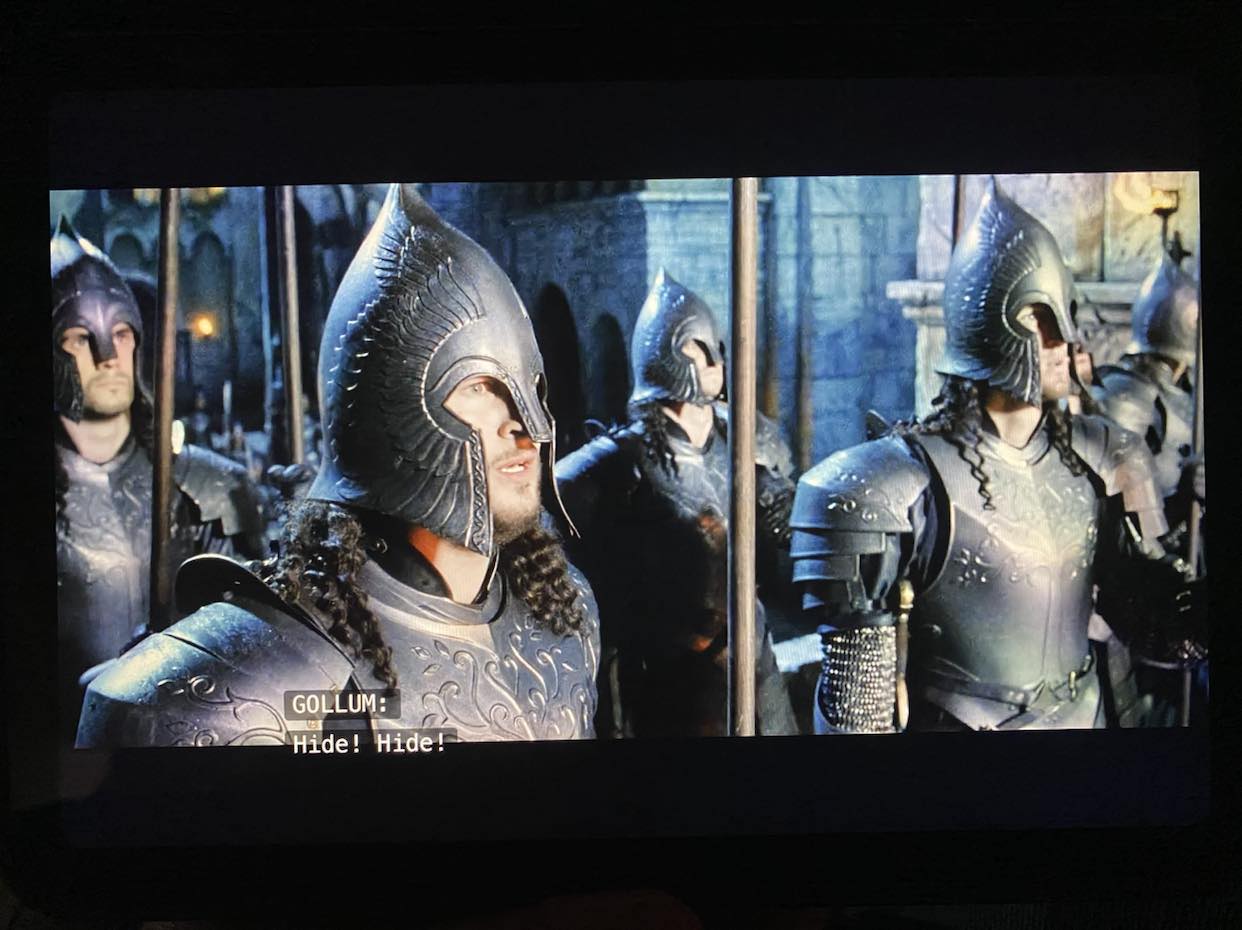
Dave Edwards (far left) as an extra in Lord of the Rings

Although I lived not far from Courtenay Place I was more interested in the scene based around Newtown venue The Space (a precursor to the Pyramid Club), then in its baroque period.

I was an underemployed arts graduate, living in a scody flat doing casual work as a film extra (blink and you’ll miss me in Lord of the Rings) or builder’s labourer, and (trying &) failing to write a novel. Partly due to lack of money, I made my own entertainment.

Although the internet existed in early form, this was before social media – so instead of selfies, oversharing took a more oblique form, filtered through art.
In all, I was a noisy (as opposed to noise) guitar & spoken word footnote to the Wellington free jazz / avant garde music scene.

Tracklist

1.After the Filmshoot (take 1) 03:25
2.Interlude: the sociopolitical context 00:51
3.Sleep/Grease 02:57
4.Etude, for electric saxophone 03:16
5.Working Like a Fountain in the Slender Morning Chill 05:11
6.Interlude: les paul tapdance 01:36
7.After the Filmshoot (take 2) 04:51
8.WLAF reprise 03:32

Further listening

The tracks on After the Filmshoot were originally part of

Loose Autumn Moans:

Sam Prebble & Mike Kingston, 2003

Acoustic songs with a string section, recorded on all-analogue equipment, by Dave Edwards, with Sam Prebble, Mike Kingston, and Simon Sweetman (2003)

Continue reading “After the filmshoot (2002)”

Ruasagavulu

Out now – the new album

by Dave Black & Dr Emit Snake-Beings

Made in Fiji

“So easy to get totally lost in this music, recommend for helping with your inner peace” – Andi Verse

Indo-Fijian inspired tropical devotional avant-garde instrumentals for keyboards, ukulele, dholak, duduk, harmonicas, DIY kitchen gamelan, and video.


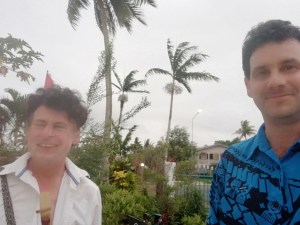
Snake Beings & Dave Black in Fiji

This was one of the last in-person international collaborations from before the world ended… it’s got nothing to do with the pandemic.

It was recorded in Suva, Fiji, 2nd and 4th of November 2019.

The title ‘ruasagavulu’ means ‘twenty’ in Fijian, to kick off the new decade optimistically.

This slideshow requires JavaScript.

Further listening

Our first duo recording wasNgumbang‘  (2015) –

a fusion of several genres and a DIY manifesto – “Pick up the pieces and make them into something new, it’s what we do…”

Continue reading “Ruasagavulu”

First Time Around: South Korea (2008)

– field recordings, electro-acoustic ethnography, Asian industrial soundscapes

by kiwis in South Korea, 20072008

Listen

Before there was ‘Gangnam Style‘ there was 영통동버스 노래 (Yeongtongdong Bus Song) 

Credits

Recorded in Suwon and Busan, Republic of Korea, 2007-2008

Dave Black – field recordings, laptop, gayageum, loops, bass, acoustic guitar, vocal

Cylvi M – tangso, shakuhachi, shaker, vocal

The pieces here are made from remixed field recordings of traditional Korean musicians, and instruments such as the gayageum, taepyongso, buddhist chants and samulnori drumming, plus our live version of the folk song ‘Arirang’.

Tracklist

1.영통동버스 노래 (Yeongtongdong Bus Song) 02:30
2.음악에 귀 결정적인 음악 관리자 (A Decisive Music Administrator (with an ear for music)) 03:18
3.물주세요 (Mool Chuseyo (give me water)) 01:47
4.동래의 행정 장관의 사무실 (Office of the Dongnae Magistrate) 03:34
5.동쪽에서 서쪽을 충족 (Konglish Cananglish (east meets west)) 01:49
6.부산 대학교 땅땅 (PNU Pounding (Arirang Blues)) 03:28
7.아리랑 (Arirang (live in Busan)) 04:43

Further listening

Continue reading “First Time Around: South Korea (2008)”

The Marion Flow (part 2, Wellington 2001)

It’s lo-fi, organic and about as eclectic as one could manage. Kind of reminds me of Nick Cave if he had grown up in Timaru. No pretentious American accents or catch phrase choruses, just a bunch of people making music. A little beauty!” – NZ Musician, August/September 2002

Listen

Credits

Written by Dave Edwards, and produced by Paul Winstanley,

Featuring Chris O’Connor (drums), Chris Palmer (electric guitars), Simon O’Rorke (percussion), Dean Brown (drums).

Recorded at Thistle Hall, Wellington, 2001, and mixed by Joe Callwood.

About

The Marion Flow was originally a longer album which spanned recordings from New Plymouth in 1999 and Wellington in 2001.

In 1999, aged 20, I’d left New Plymouth, a large rural town, where I grew up, and moved to Wellington, New Zealand’s capital city, where I’d been born and where my early pakeha settler ancestors had lived in the 19th century. The Marion Flow reflects this journey, geographically, sonically and spiritually.

“The lights on the city, the barrenness glowed

& behind me the sea as it ebbed & flowed,

Leave the loner alone to go face what he knows

Chained to the flow…” – Seafriends

For the earlier 1999 New Plymouth sessions see The Marion Flow (part 1, Taranaki);

By the time the opportunity arose to finish recording the Marion Flow I’d been thoroughly immersed in the Wellington free jazz and avant-garde music scene, and was very fortunate to have help from some of the top players there. I’d never studied music at school or been in a conventional band, and was out of my depth technically… so working around my limitations became a spark to creativity.

I’ve now reissued the two halves of the album separately – to emphasise the sense of time and place, and stylistic evolution, and to re-present them more concisely for the short-attention-span 21st century.

Edwards’ music is often a sculpture rather than a melodic composition. Within this chosen form, amongst all the writings rantings & poetry there’s much difficult pleasure to be had for the musically adventurous.” – Brent Cardy, Real Groove, July 2002

Tracklist

1.Seafriends 03:07 Dave Edwards – acoustic guitar, vocal Paul Winstanley – fretless bass Chris Palmer – electric guitars Chris O’Connor – drums
2.A Wedding 03:48 Dave Edwards – electric guitar, piano innards, canvas sheet, vocal
3.A Visit to the Beehive 00:45 Dave Edwards – acoustic guitar, vocal Simon O’Rorke – drums
4.Monkeys with Typewriters 03:30 Dave Edwards – electric guitar Chris Palmer – electric guitar Simon O’Rorke – percussion
5.Tony Was Here (but they put him on ice) 03:07 Dave Edwards – electric guitar, vocal Chris O’Connor – drums
6.Cafes in Conversation 03:38 Dave Edwards – electric guitar, vocal Paul Winstanley – fretless bass Chris O’Connor – drums
7.The Marion Flow (live at the Space) 09:07 Dave Edwards – electric guitar, harmonica, vocal Dean Brown – drums
8.Seafriends (instrumental mix) 04:05 Dave Edwards – acoustic guitar Paul Winstanley – fretless bass Chris Palmer – electric guitars Chris O’Connor – drums

Further listening

Continue reading “The Marion Flow (part 2, Wellington 2001)”

in the non-idiomatic idiom in Norway (part 2, 2014)

978-1-877448-59-1

A few years ago I wrote a chapter of Jazz Aotearoa, a book about New Zealand jazz music history, discussing the free improvisation and avant-garde jazz scene in Wellington at the turn of the millennium.

in the non-idiomatic idiom in Norway is a collection of improvised instrumental music with some of the musicians in that scene, from the point of view of my own attempts as an untrained outsider to fit in with these advanced jazz players.

The title is a reference to Simon’s house on Norway Street, where the recordings took place. The ‘non idiomatic idiom’ suggests the paradox that improvising non-idiomatically (eg in an original personal style without reference to any genre – playing neither jazz, nor rock, blues, reggae, classical etc) is an idiom in itself.

Confluence Quintet: (l-r) Julie Bevan, Michael Hall, Simon O’Rorke, Chris Prosser, Dave Edwards

with

Simon O’Rorke – synthesisers

Blair Latham – bass clarinet
Julie Bevan – acoustic guitar
Michael Hall – alto sax
Chris Prosser – violin
Dave Edwards – bass, electronics, tenor sax (8)

These sessions were recorded in 2014. I’d just returned from living overseas, 15 years after my first exposure to Wellington free jazz.

The first volume was recorded in Wellington in 1999

Continue reading “in the non-idiomatic idiom in Norway (part 2, 2014)”

The Marion Flow (part 1, Taranaki 1999)

It’s lo-fi, organic and about as eclectic as one could manage. Kind of reminds me of Nick Cave if he had grown up in Timaru. No pretentious American accents or catch phrase choruses, just a bunch of people making music. A little beauty!” – NZ Musician, August/September 2002

Listen

Credits

Produced by Paul Winstanley, & featuring Steve Duffels, the Digitator, and the Dadapapa Magickclone Orchestra.

Recorded at the TFC Lounge, New Plymouth, 1999 – with special thanks to Brian Wafer.

About

The Marion Flow is a pre-millennial fusion of warm acoustic pop, spoken word and postpunk discord.. An almost-acknowledged New Zealand classic from Taranaki – of its time (the ’90s!) yet timeless.

As the sophomore fiffdimension release (following 1998’s Scratched Surface), The Marion Flow began to mix more experimental elements alongside the songwriting. It shows an evolution in ambition and production values, and a more complex & impressionistic lyrical style.

“I sit in this tower of tongues & bells, & move to the groove

Or so that I’m reckoned, & then I am beckoned

Back to these shoes, nigh marion blues

And so to the seashore our body now go, & tale shall flow & power ye know…” – The Marion Flow

In 1999, aged 20, I left New Plymouth, a large rural town, where I grew up, and moved to Wellington, New Zealand’s capital city, where I was born. The Marion Flow reflects this journey, geographically, sonically and spiritually.

The Marion Flow was originally a longer album spanning recordings from New Plymouth in 1999 and Wellington in 2001. I’ve now reissued the two halves separately – to emphasise the sense of time and place, and stylistic evolution, and to re-present each more concisely (for the short-attention-span 21st century).

This page is for the 1999 New Plymouth sessions; for the 2001 Wellington followup recordings see The Marion Flow (part 2);

Edwards’ music is often a sculpture rather than a melodic composition. Within this chosen form, amongst all the writings rantings & poetry there’s much difficult pleasure to be had for the musically adventurous.” – Brent Cardy, Real Groove, July 2002

Tracklist

Continue reading “The Marion Flow (part 1, Taranaki 1999)”

Live 2019

An acoustic solo set, live at Wairarapa TV in Masterton, New Zealand

– which took place live on the internet. This was simulcast on Freeview CH41, ArrowFM 89.7FM and YouTube. The set was part of the Property Law Service May Music Marathon – 12 straight hours of live Music to Television screens during NZ Music Month on May the 4th 2019.

Tracklist

1.Cafes in Conversation 01:19
2.Seafriends 03:09
3.Summer Skin 05:08
4.Eastern 03:00
5.아리랑 (Arirang) 01:11
6.The Blast of a Wintry Day (by John Collie, 1856) 03:55
7.The Land of My Youth (by John Collie, 1856) 02:49
8.Here’s a Health to My Cronies (by John Collie, 1856) 02:19
9.The Marion Flow 03:33
10.fiffdimension interview by Nikki King 16:12

About

Living in a small town I don’t get to as many gigs as I used to… so here using 21st century technology to play ‘virtually’ everywhere.

On the other hand, musically this was closer to a traditional folk/singer-songwriter set than I’d done for quite a while, eschewing dissonant improv, multitracking, live backing musicians or electronic trickery.

I kept my half hour minimal and acoustic (the discord and electric noise I’m saving for another time soon) and updated my past – with

Continue reading “Live 2019”

Live 1999

This is what ‘partying like it’s 1999’ actually sounded like at the time:

“If only I could play guitar like that – bastard!” – Chris Knox

Tracklist

1.Cafes in Conversation 03:44
2.Banana Wizard 02:59
3.I Don’t Need You (to Grind Me Down) 02:15
4.Given in Clouds (a wedding) 04:05
5.Chairs to Tie the Revolution Down 03:31
6.Midwinter Night 03:35
7.Locked Without March 04:02
8.You Can’t Complain 04:48
9.Open the Dogs 04:43
10.Summer in Fairyland 03:28
11.Tony Was Here (but they put him on ice) 03:19
12.The Marion Flow 09:47

Chris Knox

On this occasion I was privileged to be the opening act for Chris Knox. So this album is (obviously) dedicated to him.
Chris influenced generations of artists in NZ and abroad; his place in the pantheon is secure.

Background

I was 20 years old, and had moved back to Wellington (my birthplace, though not my hometown). I had with me a cheap imitation Stratocaster; some notebook scribblings; a harmonica in my pocket; and an album and a half recorded.

Continue reading “Live 1999”

the Electricka Zoo album

We’re happy to announce the release of the Electricka Zoo‘s first (self-titled) album.

The duo of Dave Black & the Digitator, The Electricka Zoo combine influences from EDM and post-punk avant-garde rock to jazz, reggae, Balkan and Portuguese music. Their self-titled debut album features 8 original tunes by the bass/guitar and electronica duo wrapped in colourful mandala artwork by Lucie Hannon.

Thanks everyone who came to the launch gig at the Pyramid Club !