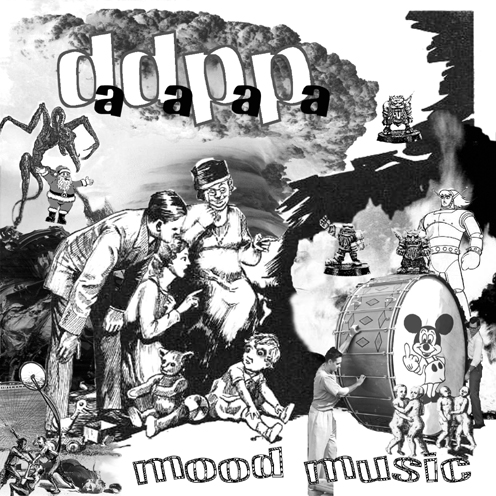
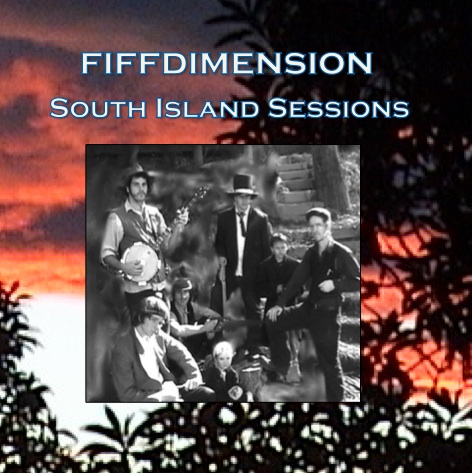
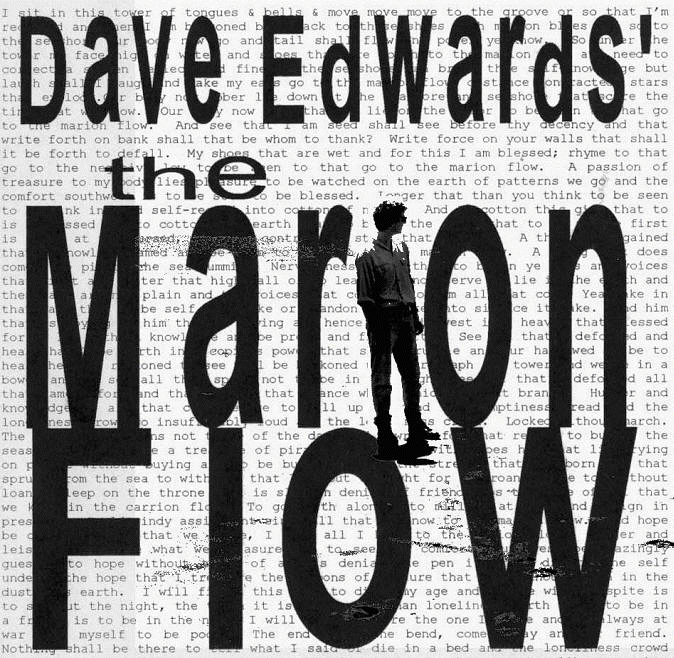
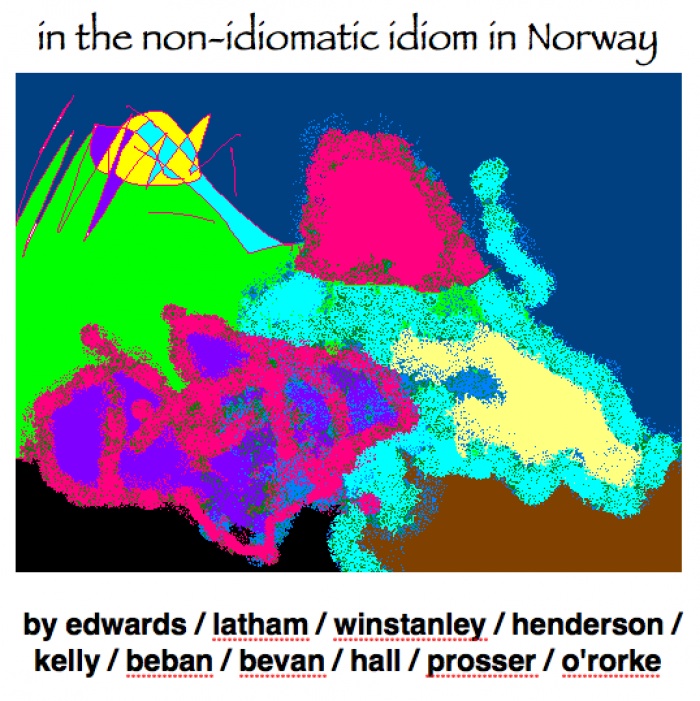
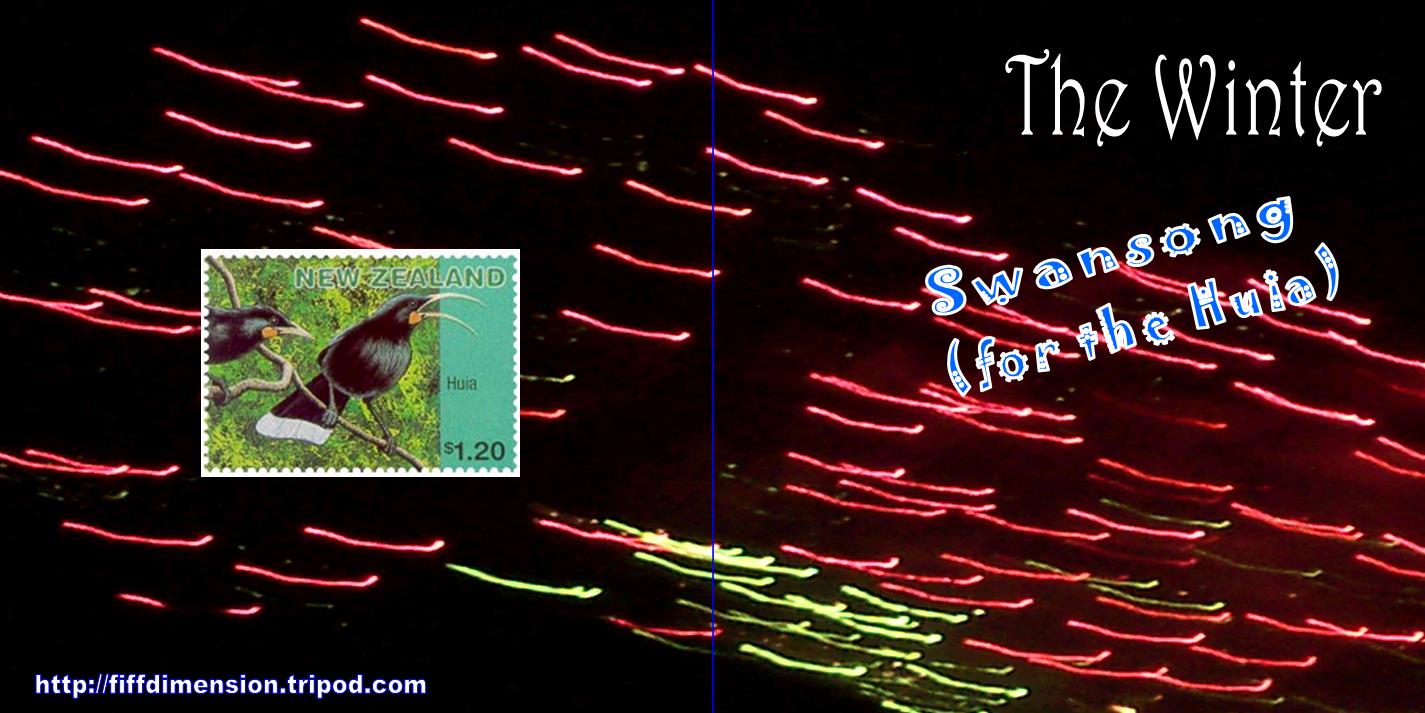
A companion to The Marion Flow, recorded in 1999 by the same lineup who provided that album’s longest (and least conventionally song-based track, pointing the way towards the increasingly radio-unfriendly Mantis Shaped and Worrying), “Lucifer Directing Traffic (at 3AM)”
Recording engineer Paul Winstanley, head of the excellent, now San Francisco-based avant-garde music label Eden Gully recalls it thus:
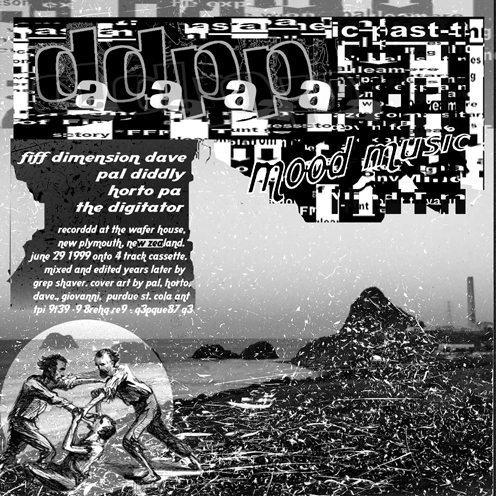
“after recording tracks for The Marion Flow at Wafer HQ in New Plymouth an ad hoc group of associated locals assembled to record for several sessions of improvised rock/noise deconstruction. really, the only rock references here come from the guitars, with the sputtering synth, air-sucking turntables, didgeridoo and sundry toys providing layers of surreal abstraction. throw in some spoken word and a special guest appearance by N.P. record mogul Brian Wafer on vacuum cleaner – and the dAdApApA nova had blazed and fizzled in the blink of an eye.
“it wasn’t until several years later after the master mixes had been lost, partially recovered and then rediscovered intact again that “Waiting for the Drummer’ was given a final mastering and released as a CDR on EdenGully. it’s been a long strange journey…..”
Fiff Dimension Dave – guitars, spoken word and furbie / Speed Cook – turntables and recording / Pal Diddly – synth and pithy observations / The Digitator – guitar, didgeridoo / BWafer – vacuum cleaner and coffees
“As Dave Edwards he has explored fuzzypunk, free-jazz, spoken word, alternative-folk and demented pop… as Dave Black, the palette is broadened” – Simon Sweetman
by Dave Black (acoustic & electric guitars, banjo, harmonica, laptop, bass, tenor saxophone, field recordings, piano, gayageum, vocal), with
“Experimental and avant-garde…. There is a clear passion, and a commitment to pushing the boundaries… This will challenge your perceptions of what constitutes music and open the mind to new possibilities of sounds that surround us – muzic.net.nz“
A compilation of songs, spoken word and instrumentals from the early phase of my gloriously unsuccessful career:
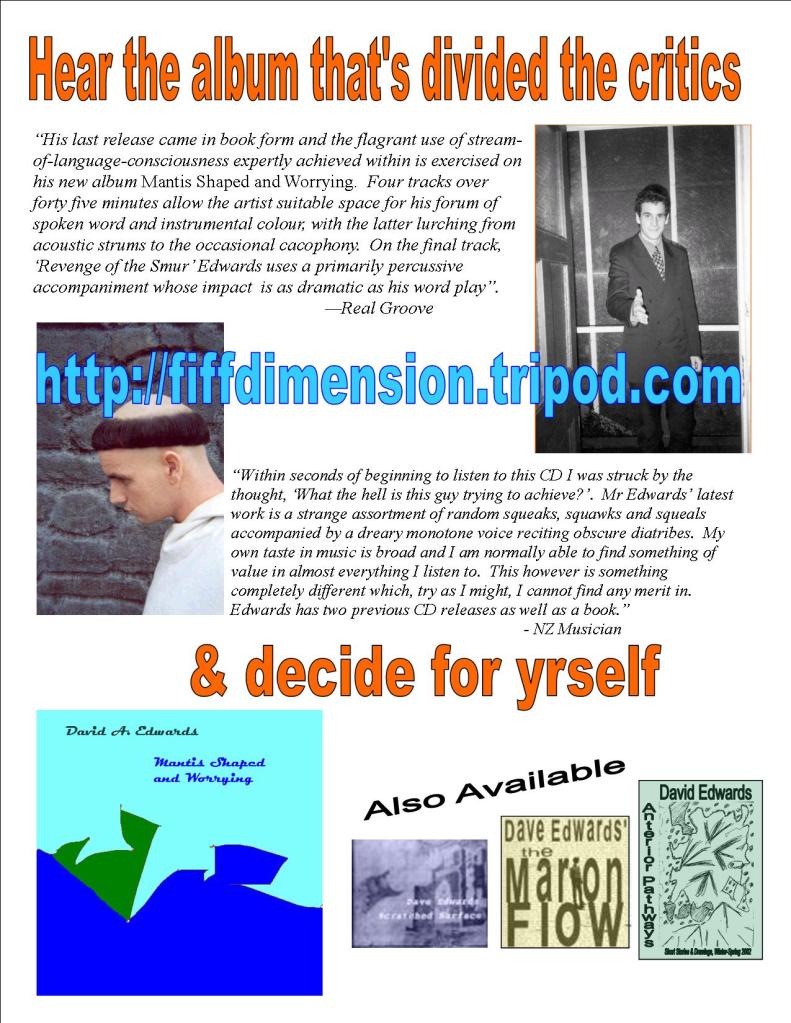
“Whilst shopping from fiffdimension, make sure to get hold of ‘Gleefully Unknown’ – a best-of compilation of Dave Edwards’ music from 1997 to 2005. Rough outsider folk-blues mysteries, dissonant rock textures, electric and acoustic improvisations…
“Edwards strikes me as one of the most overlooked musicians from the fertile lands of New Zealand and if you need a fresh start this might very well be the place.” – Mats Gustafsson, The Broken Face
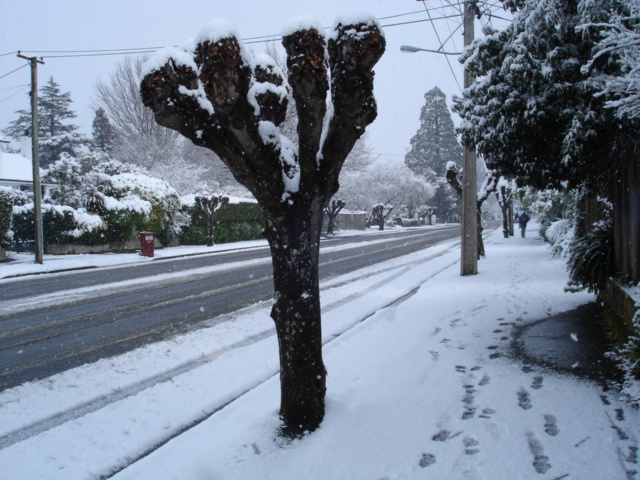
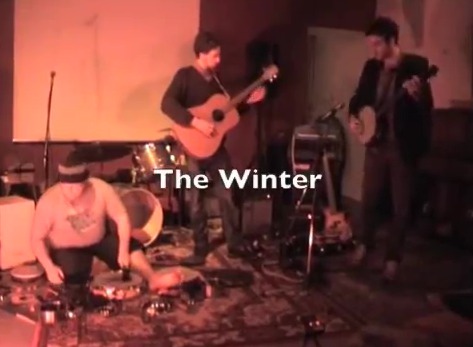
2011 – year of the Christchurch earthquakes, the Arab Spring, the Fukushima disaster, the shootings in Norway,the Queensland floods… and the Wellington (New Zealand) winter was colder than usual.Acoustic improvisations on guitar, ukulele, banjo, clarinet, piano, harmonica and percussion by The Winter (Simon, Dave and Mike).
It was 10 years ago nearly to the day that I had my first jam as part of a group of musicians that would go on to take the name The Winter. The name coming from the day we first got together, 2003’s winter solstice.
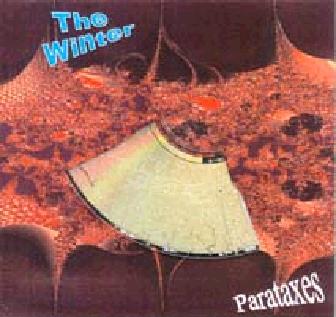
I listened back to Parataxes last night for the first time in ages. I wouldn’t say I ever made a habit of listening to it, but as with other recordings I’ve made it gets trotted out from time to time. Very occasional, but I couldn’t tell you I’d never listened to it, or that I’ll never listen to it again.
The Winter has became somewhat infamous in the life of Blog on the Tracks because every time a group of fans get upset with me for picking on their band, a clip from YouTube is circulated suggesting that I cannot play music at all; the band I’m working with is not in tune and not playing anything resembling a song.
I’ve felt a little sad about this only in that it compromises the two other musicians in The Winter. They don’t deserve the abuse but are presumably trialled on a guilty-by-association tip. But I’m fair game. I front up and say things about music. It’d be a bit rich if I couldn’t handle people saying things about mine.
So I figured I should share that post here – and the link to the album to stream or download (both of which I have provided links to above). Have at it. But be warned…you might instead prefer to run to the hills.
Ten years on it was strange listening to this music. It’s improvised music, avant-garde perhaps, or experimental. These are tags that others have used. It might well be the biggest load of s**t you ever hear. That’s fine. I’ve never hidden from this – nor any of the other music I’ve had a hand in. But I understand that I’m an easy target with this platform.
The music on Parataxes and the early jams with The Winter were really important for me – an extension of my appreciation for free and improvised musics – free-jazz/noise/ambient – a lot of free/improv passed me by when I first tried turning an ear to it. But I found it. I found the bits and pieces I liked. And part of appreciating it was having a go at it. My go. With The Winter.
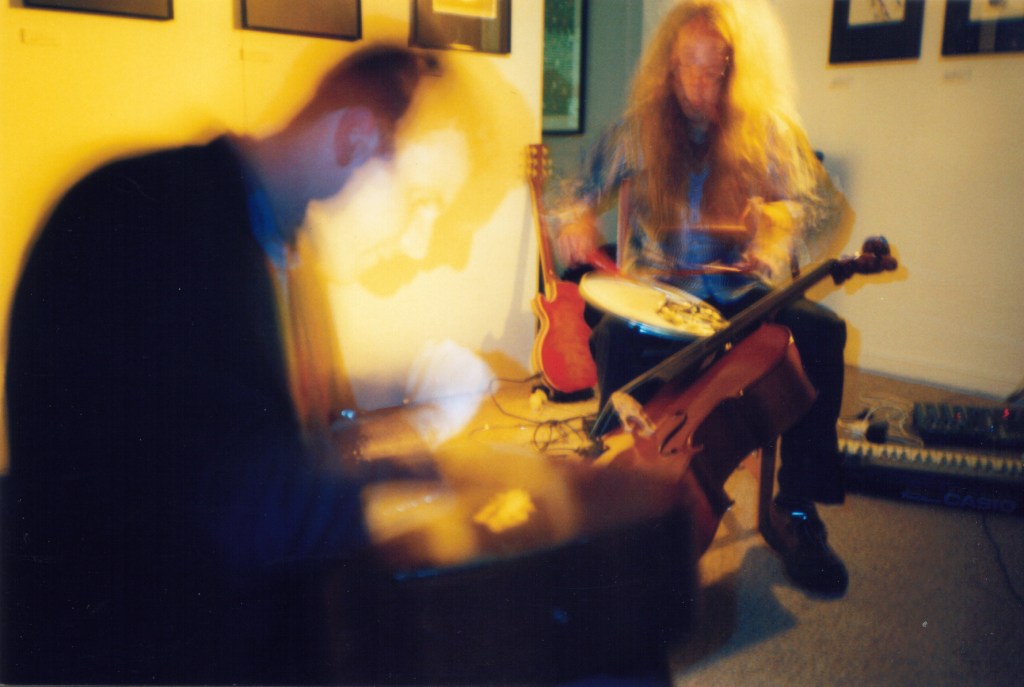
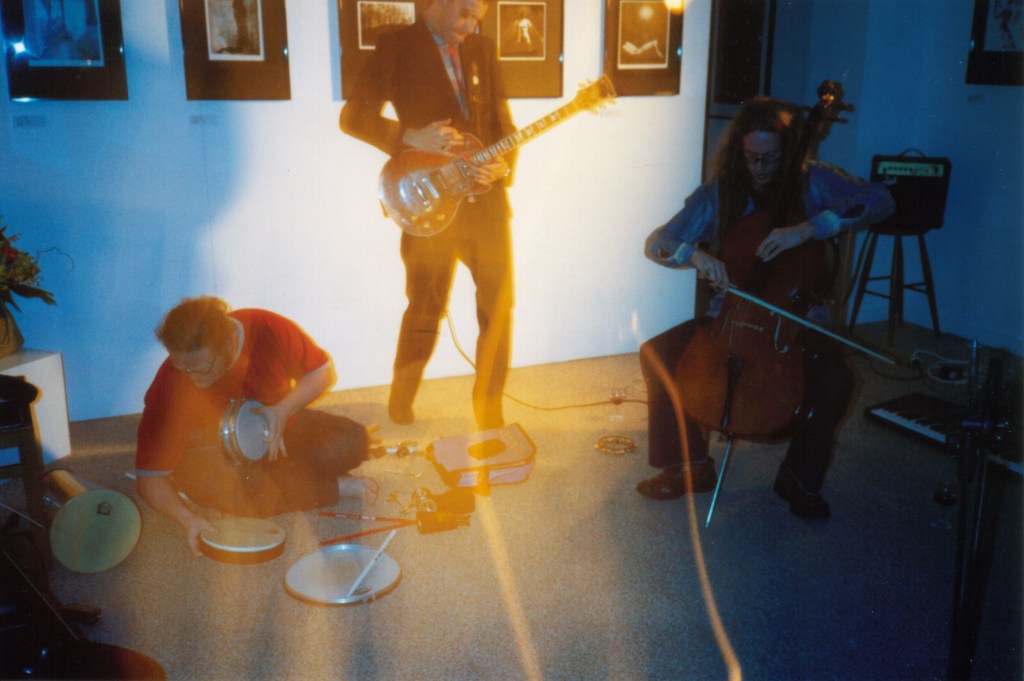
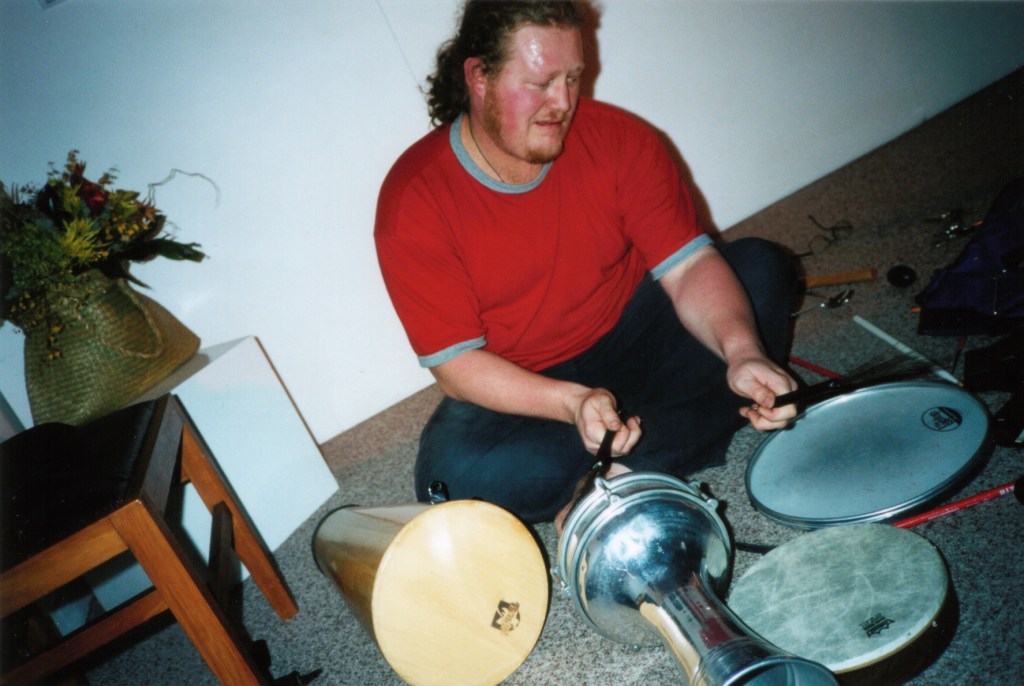
It was the most challenging – and freeing – that a playing experience has ever been. I was so scared the first time we performed live at the Photospace Gallery. I’m sitting there with toy percussion instruments, found pieces, old drum parts scattered around me. And I have no idea what I’m going to do with them – beyond bang at them. It was so stupid of me. But it was great. I loved it.
I made good friends from playing in The Winter – we still catch up, make music now and then, or maybe to you it’s not music at all. That’s fine. We have a cup of tea and a chat and we make our pieces of music – music that makes sense to us. We use different instruments every time. And nothing is ever the same. Nothing’s repeated, nothing’s played the same way twice. But it always sounds like us. Over the past 10 years and a handful of scattered performances we found our sound. And I’m really glad we did. It helped me to appreciate the world’s great improvisers; it has put me on to some amazing music and taught me a lot about myself.
The debut album by The Winter: instrumental improvisations from Wellington, New Zealand, 2003. The band emerged fully formed on winter solstice day in June.
Builds from acoustic intimacy around the winter fireplace to the electric blizzard climax of ‘Parataxes 9‘.
“Derek Bailey on acid!” – Anthony Donaldson, Primitive Art Group
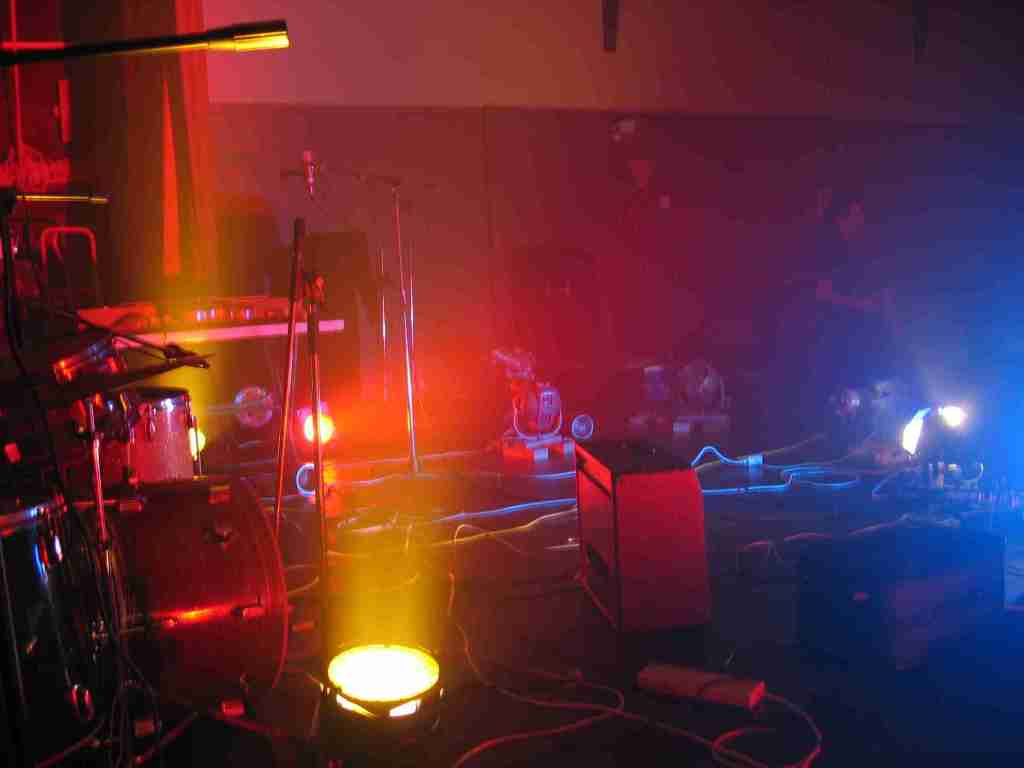
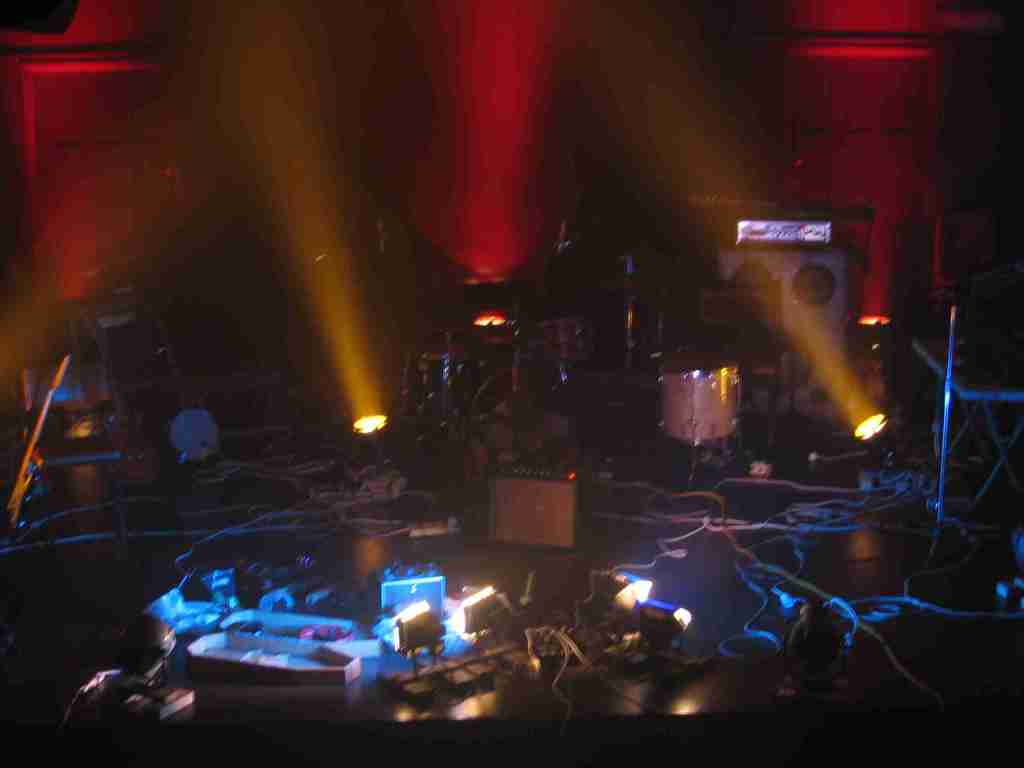
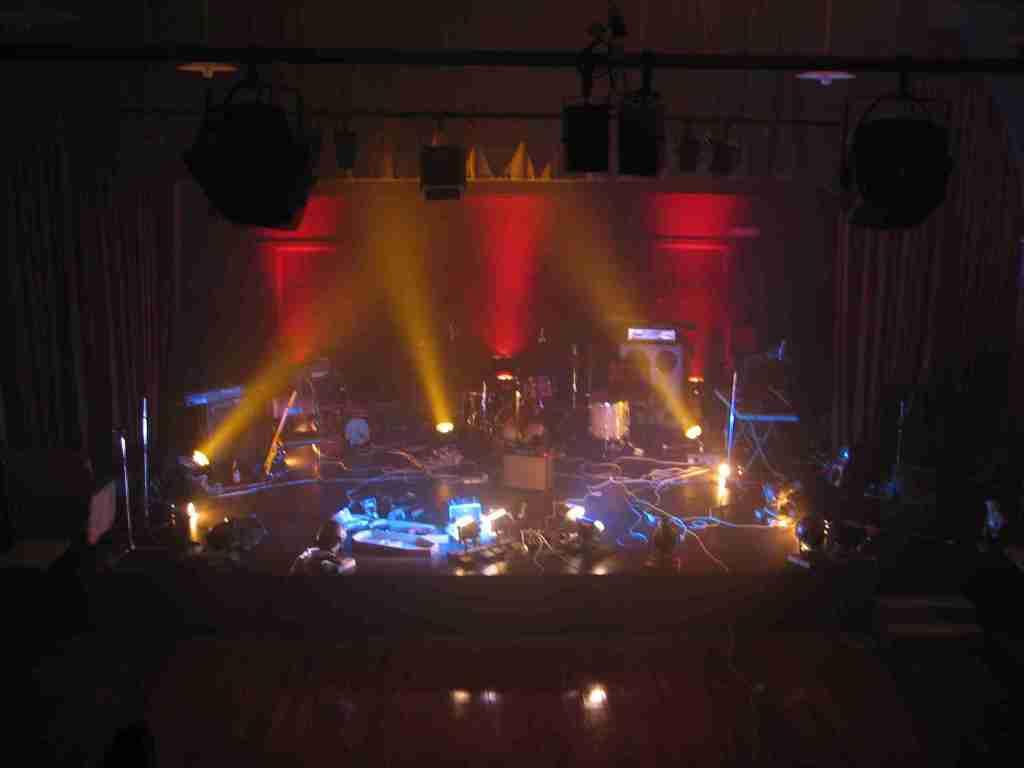
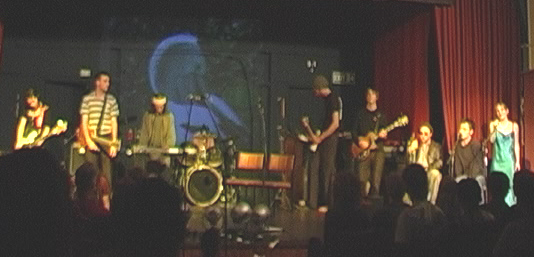
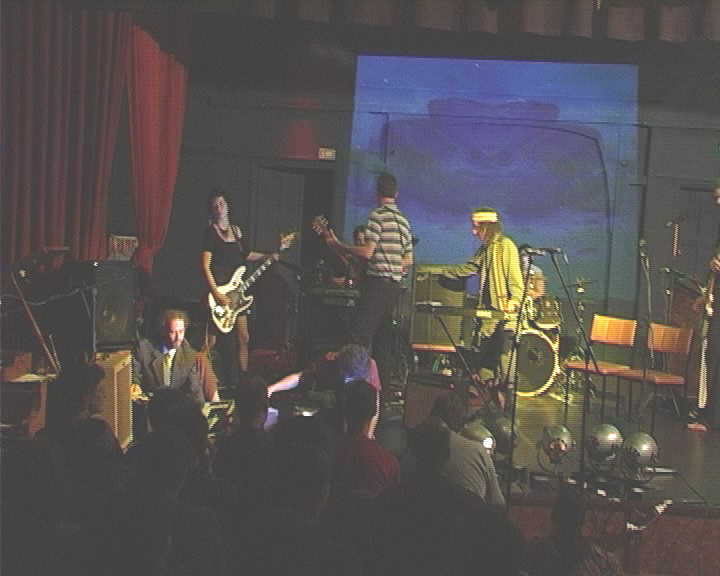
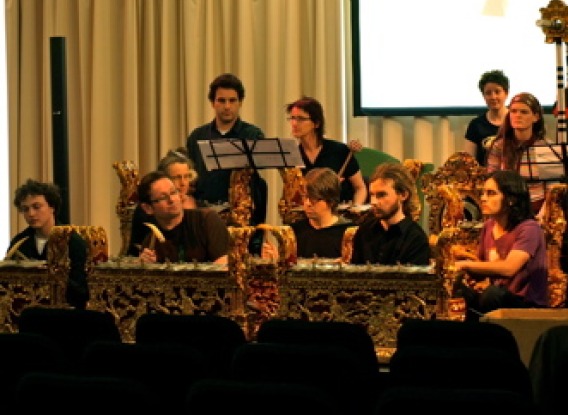
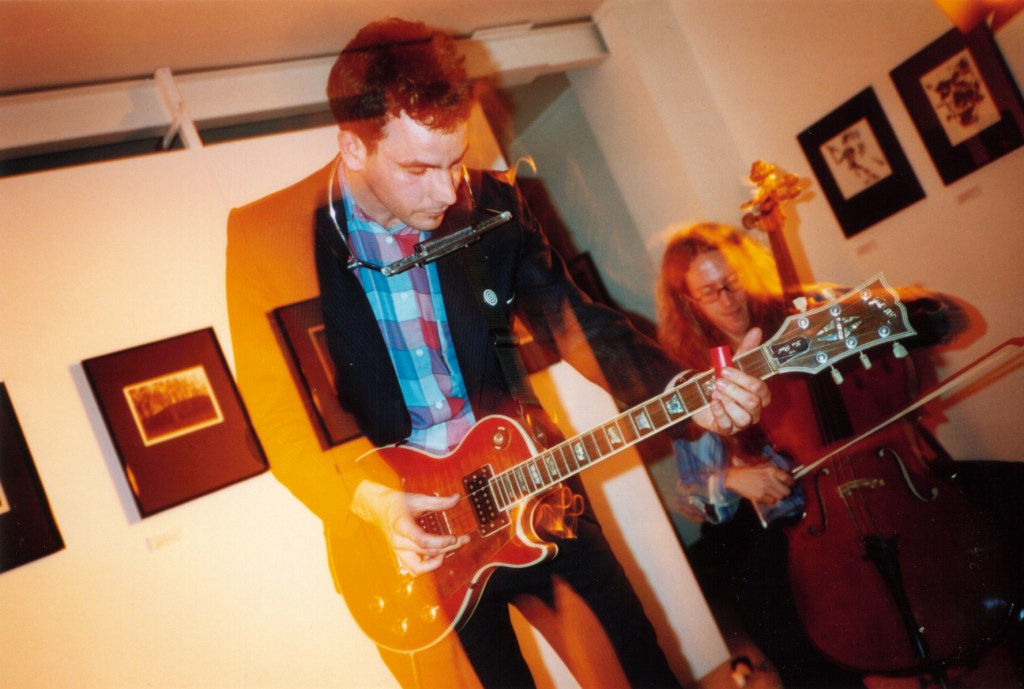
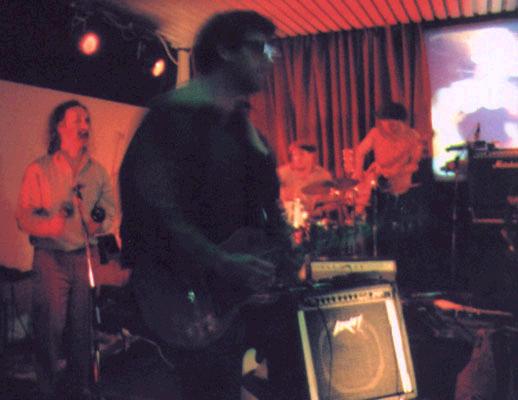
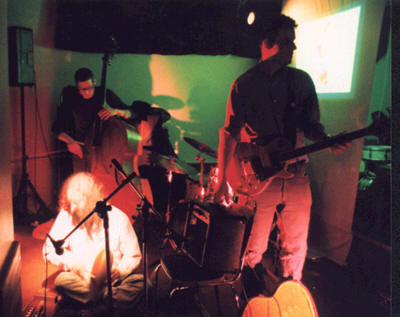
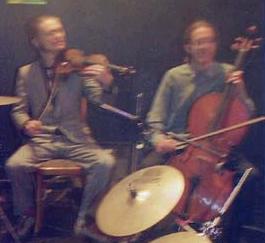
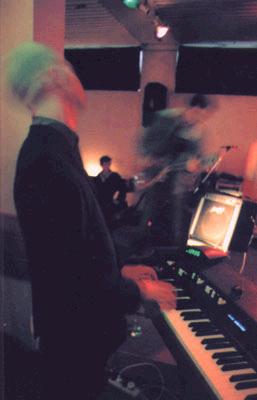
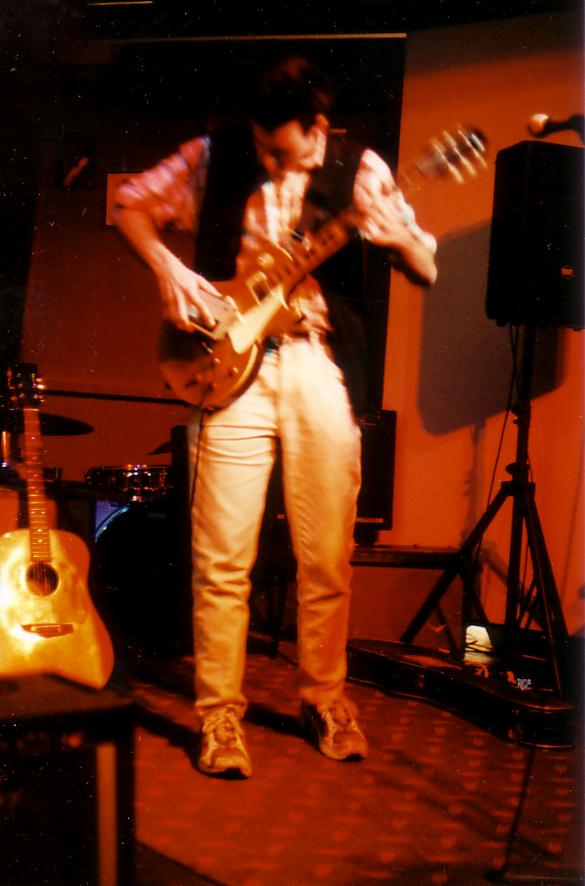
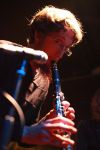
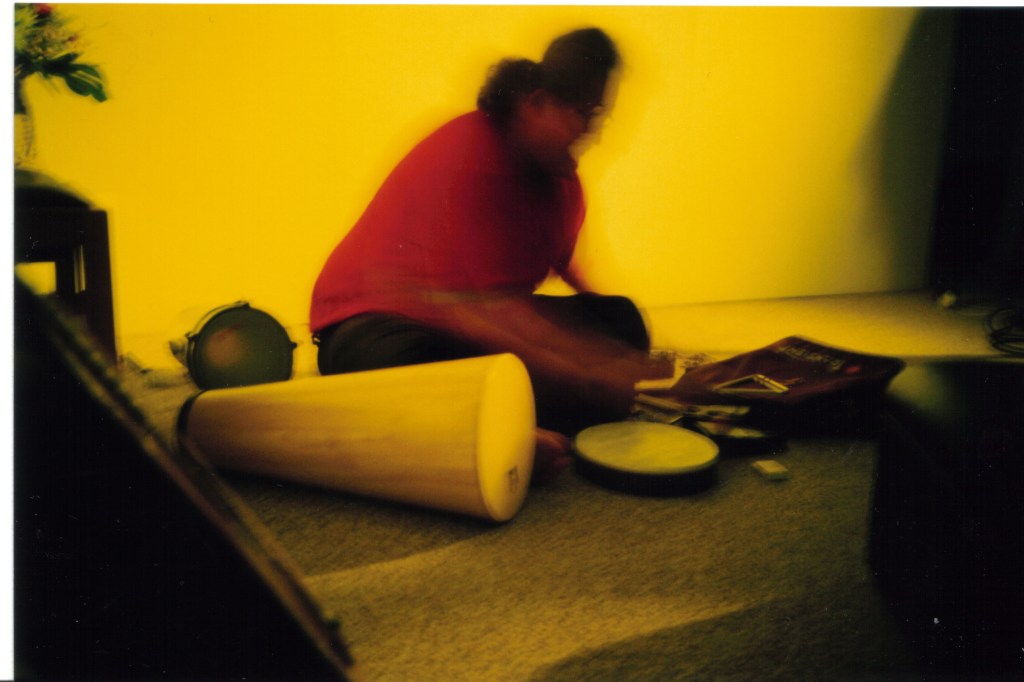
Photos by James Gilberd, from The Winter’s first gig at Photospace Gallery, Wellington NZ, August 2003.
Mike Kingston– cello, electronic composition (1,4,7), electric guitar (2), acoustic guitar and slide whistle (8)
Dave Edwards– acoustic and electric guitars, harmonica
“The Winter are a Wellington based improvising trio, and Parataxes is their 1st release. It documents both acoustic and electric live sets that drift from eastern sounding cello led pieces to fairly extreme feed-backy noise. A key member of the group is Wellington’s master of pseudo-autistic intensity, Dave Edwards, whose guitar and harmonica work definitely moves the whole into a fairly edgy sphere. Over such a duration this can make pretty harrowing listening, but sometimes such immersions are worth it.” – Antony Milton, Pseudoarcana
“A strange sonic brew that includes dissonant rock textures, rough outsider folk-blues mysteries, electric and acoustic improvisations and a considerable part of tasty feedback. Imagine equal parts Derek Bailey, New Zealand’s Pumice and classic ’60s blues/folk and you’re in the right ballpark.” – The Broken Face
“I can be pretty naive sometimes, and I often forget that it actually gets cold in New Zealand. For many of us Americans, we think of New Zealand as being somewhat tropical. It’s an island after all, and we are brought up believing that islands are exotic places that exist in the middle of the warm oceans. This is obviously a mistake. Although I still forget that the seasons are opposite in the Southern hemisphere, the existence of dreary weather in New Zealand is cemented in my mind. A great deal of experimental music from New Zealand has a distinctly desolate, overcast feeling to it.
“Appropriately named, The Winter hail from Wellington, New Zealand. Most of you probably associate Wellington with the brilliant Pseudo Arcana label, and keeping that sound in mind, The Winter offer up over an hour of freeform aural explorations. These loose improvisations range from processed field recordings to gritty blues dirges to no-wave skronk. This trio consists of Simon Sweetman on drums and percussion, San Shimla on cello, and Dave Edwards, whose great solo albums have been circulating for years, on guitar and harmonica. All three artists have a firm grasp of their respective instruments and employ their talents well throughout “Parataxes.”
“One thing I enjoy most about this record is Edward’s playing. On the second track, the highlight is when he gets into a real groove with his guitar and harmonica. The two complement each other perfectly, and it has this 1960s folk feel to it that somehow doesn’t seem out of place. As Sweetman joins in using various metallic percussive instruments, the two start playing off each other. Their interaction is impressive, and adds a vague sense of structure to this otherwise scattered piece. I love when long improv sessions flow like a wave. At times, they’re completely disjointed, but during rare moments everything seems to come together. These last few minutes of the second piece on “Parataxes” is one of those. It’s excellent.
“Most of “Parataxes” is similar to the second track. Throughout long, meandering jams, the trio searches through musty fog, searching out common ground. As if in queue, they find each other, transfixed in the middle somewhere. During the times when it all comes together, this is as choice as any freeform improvisations I’ve heard in months. However, these tracks wouldn’t this good if it weren’t for the journey toward a collective state of mind. It might be all about the end result, but the means of getting there is just as important…. The Winter leave their mark. They soundtrack the devolution of autumn into the coldest, cruelest of months. Using sparse sounds and sometimes harsh instrumentation, “Parataxes” is all about finding the moment and maintaining it for as long as possible. Recommended.”






















 fiffdimension
